Category Archives: General Information

Social Media: For Parents

See the source image

Sharing information and images via social media is a part of daily life. Social media allows kids to communicate with one another, and to document and share what they are doing. It’s important for parents to learn about the different technologies children are using to help keep them safe online.

What is social media?

Social media refers to websites and apps that allow people to interact with others, or create and share content. Popular social media platforms include Snapchat, Instagram, Facebook, Twitter, YouTube and Flickr

See the source image

There are many different ways that people use social media:

  • Online profiles: Most social media sites require users to set up a profile, which usually includes a name, e-mail address, birthdate, interests and a photo.
  • Friends: Depending on the tool, users “follow” or “request” to be friends with people they know, such as classmates or family members. They may also use it to find new friends.
  • Messaging/Chats: Using instant messaging over the Internet or between smartphones to send messages.
  • Photo and video sharing: Many social networking sites or apps allow users to upload photos and videos, or to share live videos. These can also be public or private depending on privacy settings.
  • Vlogs: Short for “video blogs”, vlogs are posted regularly to a video sharing platform (like YouTube). Vloggers can develop very big followings online.
  • Joining groups: Many apps allow users to create groups. People “join”, “like” or “follow” groups to access information and have conversations with other members.
  • Playing games: Children and teens visit online sites to play games, alone or with their friends.

How can I keep my children safe using social media?

  • Parents must know and be aware about sites, programs and apps that the child is using. Some social media platforms have age restrictions to join, but it’s easy for children to get around them.
  • Show interest in your child’s online life and ask questions. Ask them about the people they talking with online. Showing genuine interest will help the children feel comfortable talking about it. Explain that it’s easy for someone on the Internet to pretend to be someone they’re not.
  • Get online family protection. Programs that provide parental controls can block websites, enforce time limits, monitor the websites your child visits, and their online conversations.
  • Talk about the importance of keeping online friendships in the online world. Make it clear that if your child wants to meet an online friend in person, it must be in a public place and with a trusted adult.
  • Discuss what’s okay and safe to post online, and what isn’t. Online posts stay online forever. People can’t always control what others post about them. Explain that information and photos found online can turn up again years later.

What about limits?

  • Model good behaviour on your own social media accounts.
  • Set screen time limits and set rules on when screens are appropriate to use.
  • Teach your child the value of separating themselves from devices for technology-free time. Social media can be exciting, but it should be considered entertainment. Remind your child that no message is so important that it can’t wait until the morning.

See the source image


What should I know about online privacy?

Most social media websites have privacy policies and settings, but they are all different. Some sites are completely public, meaning that anyone can read or look at anything, anytime. Other sites let you control who has access to your information.

The following suggestions will help you and your children protect their online privacy:

Read a website’s privacy policy before sharing any personal information.
Check your child’s privacy policy settings to make sure he isn’t sharing more information than you want (for example, location).
If they use a GPS-enabled smartphone or tablet, they could be posting status updates, photos and videos with “geotags”. Geotags share the exact location of where your photo was taken. Make sure these are turned off on devices.
Encourage your child to use an online nickname, instead of a real name, whenever possible.
Make sure your child keeps every account password protected, and have them change passwords often.
Remind your child not to share passwords, even with friends.
Your child should not accept friend requests from (or actively connect with) people they don’t know in real life.
Encourage them to protect and respect their friends’ privacy too. They should ask permission before posting something about a friend, such as a photo or a video and vice versa.

Promoting Home to School Links: For Parents

  • Talk with your child about their day at school. You will show your children that you are interested and they become more motivated to learn.
  • Make sure that your child has had a good sleep and a supplement breakfast, to be alert at school. Furthermore, drop off your child at school on time as not to miss important information.
  • Drop off your child dressed neatly and appropriately.
  • Try to read aloud with your child everyday during free time.
  • Help and assist the children with their homework. This does not mean to do the homework yourselves.
  • Support School’s Behaviour Policy by teaching your child about respect and set rules which are similiar to those at school.
  • Consult with the School and Teacher to build a better relationship

Children’s Outdoor Safety

See the source image
  • Tell your child why it is important to walk on the sidewalk and how to stay out of traffic. Tell them not to play in the street or run after stray balls.
  • Be cautious when letting your child ride her tricycle. Keep them on the sidewalk and away from the street and make sure they are wearing a helmet.
  • Watch your child at all times when he is playing outside.
  • Be safe in the water. Teach your child how to swim, but watch them at all times when they are in or around any body of water.
  • Teach your child how to be safe around strangers.
  • When driving, children should be in the backseat of the vehicle and keep the child in a forward-facing car seat with a harness until he reaches the top height or weight limit allowed by the car seat’s manufacturer.

Positive Parenting Tips

  • Nurture the love for books at an early age by taking the children to the library or bookstore and, most important read with them.
  • Let your child help with simple house chores.
  • Encourage your child to play with other children. This helps him to learn the value of sharing and friendship.
  • Be clear and consistent when disciplining your child. Explain and show the behaviour that you expect from the child. BE assertive.
  • Talk with the child in complete sentences to develop good language skills.
  • Help your child through the steps to solve problems.
  • Give your child a limited number of simple choices (for example, deciding what to wear, and what to eat for snack).
  • Eat meals with your child. Let your see you enjoying eating fruits, vegetables, and whole grains at meals and snacks.
  • Make sure your child gets the recommended amount of sleep each night.

Parental Engagement

See the source image

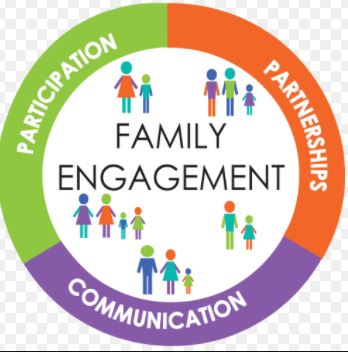
Parent engagement in education is about parents and carers, schools and communities working together to ensure that every parent can play a positive role in their child’s learning, school community, sport, and social life.

Parents and families play an important role in supporting their child’s education. Research has shown that when schools and families work together, children do better, stay in school longer, are more engaged with their school work, go to school more regularly, behave better, and have better social skills. Parent engagement also results in longer term economic, social and emotional benefits.

School-to-home notebooks – Read information given about the children’s progress at school.

Keep face-to-face contact with the teacher – Ask the teacher questions which you are concerned with and share information.

Training workshops – Attend talks organised by the school. It could be child psychology, learning difficulties, first aid, internet safety, bullying, child nutrition, and more.

Events – Attend events (like, Christmas Concert). This give parents opportunity to have fun and establish relationships with other parents and school staff.

Read Emails Frequently

Visit School Website or Blogs regularly

Subscribe to School Newsletter

Bullying: For Parents

Bullying is unwanted, aggressive behaviour among school aged children that involves a real or perceived power imbalance. The behaviour is constantly repeated. Both kids who are bullied and who bully others may have serious lasting problems.

Bullying can be devastating for children’s confidence and self-esteem, especially in their early years.

It is important to talk with and listen to the child. Try to find out more about the situation before talking to teacher. Furthermore, it is important that as a parent you remain calm as it is a chance to help the child solve the problem. If you get angry, the child might think it is their fault and in reality, it is not.

Praise the child for telling you about their problem and let them know you are going to help them. It is also important to avoid negative comments as they will not help anyone.

Finally, talk to the school and the child’s teacher. Be calm and discuss it together, as a team. Do not contact the bully’s parents yourself as it might make it worse.

The COVID-19 Situation

COVID-19 was first identified in Wuhan, China, – ‘CO’ stands for corona, ‘VI’ for virus, and ‘D’ for disease. The COVID-19 virus is a new virus linked to the same family of viruses as Severe Acute Respiratory Syndrome (SARS) and some types of common cold.

There are a lot of myths and misinformation about coronavirus being shared online so, it’s important to be careful where you look for information and advice. It’s also important to keep up to date on the latest recommendations and news.

What are the Symptoms of COVID-19

Symptoms may include fever, cough and shortness of breath and, in more severe cases, infection can cause pneumonia or breathing difficulties which can be fatal. These symptoms are similar to the flu or the common cold. This is why testing is required to confirm if someone has COVID-19. It’s important to remember that key prevention measures are important.

How does the COVID-19 virus spread?

The virus is transmitted through direct contact with respiratory droplets of an infected person (through coughing and sneezing), and touching surfaces contaminated with the virus. The COVID-19 virus may survive on surfaces for a few hours to several days, but simple disinfectants can kill it.

Here are some precautions you and your family can take to help avoid infection:

graphique-coronavirus-1

Wash your hands frequently using soap and water or an alcohol-based hand rub

graphique-coronavirus-2

Cover mouth and nose with flexed elbow or tissue when coughing or sneezing. Dispose of used tissue immediately

graphique-coronavirus-3

Avoid close contact with anyone who has cold or flu-like symptoms

COVID-19 cleaning surfaces infographic.

Regularly clean and disinfect frequently touched surfaces like phones, doorknobs, light switches and countertops

graphique-coronavirus-4

Seek medical care early if you or your child has a fever, cough or difficulty breathing.

Here are some do’s and don’ts for how to talk about the coronavirus with your children, family and friends to avoid discrimination and bullying:

  • DO: talk about the new coronavirus disease (COVID-19)
  • DON’T: attach locations or ethnicity to the disease. Remember, viruses can’t target people from specific populations, ethnicities, or racial backgrounds.
  • DO: talk about “people who have COVID-19”, “people who are being treated for COVID-19”, “people who are recovering from COVID-19” or “people who died after contracting COVID-19”
  • DON’T: refer to people with the disease as “COVID-19 cases” or “victims”
  • DO: talk about people “acquiring” or “contracting” COVID-19 
  • DON’T: talk about people “transmitting COVID-19” “infecting others” or “spreading the virus” as it implies intentional transmission and assigns blame.
  • DO: speak accurately about the risk from COVID-19, based on scientific data and latest official health advice
  • DON’T: repeat or share unconfirmed rumours, and avoid using hyperbolic language designed to generate fear like “plague”, “apocalypse” etc.
  • DO: talk positively and emphasise the importance of effective prevention measures, including following our tips on handwashing. For most people this is a disease they can overcome. There are simple steps we can all take to keep ourselves, our loved ones and the most vulnerable safe.