Monthly Archives: Jun 2020




Children’s Interests Padlet

Il-Ktieb tal-Pirati (Book Creator)
Dan il-ktieb ġie magħmul flimken mat-tfal.
Jekk joġgħbok għafas hawn biex tarah.
Counting in the Kitchen
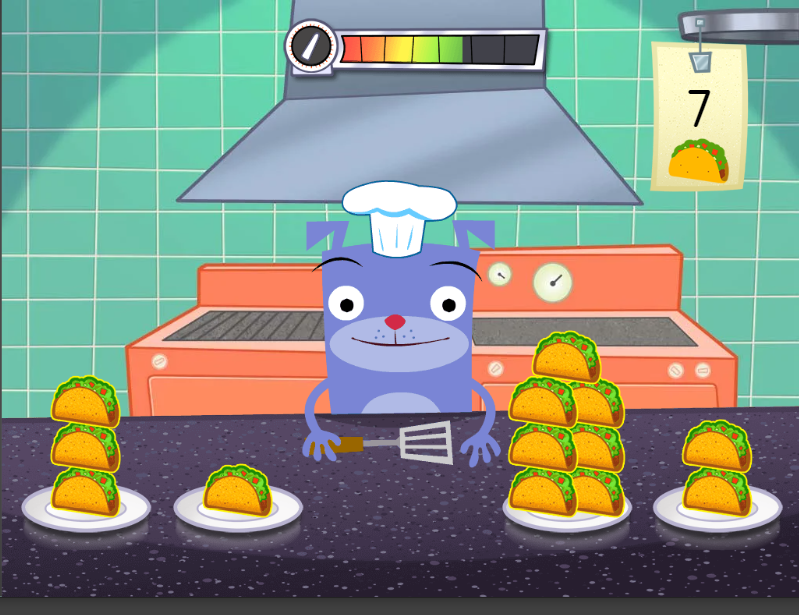
Counting in the kitchen has never been so much fun as they practice counting numbers 1–10. As Floyd expertly stacks up orders of burgers and tacos, it’s up to the child to determine which plate has the number of items that match the number at the top of the screen.
Positive Parenting Tips
- Nurture the love for books at an early age by taking the children to the library or bookstore and, most important read with them.
- Let your child help with simple house chores.
- Encourage your child to play with other children. This helps him to learn the value of sharing and friendship.
- Be clear and consistent when disciplining your child. Explain and show the behaviour that you expect from the child. BE assertive.
- Talk with the child in complete sentences to develop good language skills.
- Help your child through the steps to solve problems.
- Give your child a limited number of simple choices (for example, deciding what to wear, and what to eat for snack).
- Eat meals with your child. Let your see you enjoying eating fruits, vegetables, and whole grains at meals and snacks.
- Make sure your child gets the recommended amount of sleep each night.
Parental Engagement
Parent engagement in education is about parents and carers, schools and communities working together to ensure that every parent can play a positive role in their child’s learning, school community, sport, and social life.
Parents and families play an important role in supporting their child’s education. Research has shown that when schools and families work together, children do better, stay in school longer, are more engaged with their school work, go to school more regularly, behave better, and have better social skills. Parent engagement also results in longer term economic, social and emotional benefits.
School-to-home notebooks – Read information given about the children’s progress at school.
Keep face-to-face contact with the teacher – Ask the teacher questions which you are concerned with and share information.
Training workshops – Attend talks organised by the school. It could be child psychology, learning difficulties, first aid, internet safety, bullying, child nutrition, and more.
Events – Attend events (like, Christmas Concert). This give parents opportunity to have fun and establish relationships with other parents and school staff.
Read Emails Frequently
Visit School Website or Blogs regularly
Subscribe to School Newsletter
Bullying: For Parents
Bullying is unwanted, aggressive behaviour among school aged children that involves a real or perceived power imbalance. The behaviour is constantly repeated. Both kids who are bullied and who bully others may have serious lasting problems.
Bullying can be devastating for children’s confidence and self-esteem, especially in their early years.
It is important to talk with and listen to the child. Try to find out more about the situation before talking to teacher. Furthermore, it is important that as a parent you remain calm as it is a chance to help the child solve the problem. If you get angry, the child might think it is their fault and in reality, it is not.
Praise the child for telling you about their problem and let them know you are going to help them. It is also important to avoid negative comments as they will not help anyone.
Finally, talk to the school and the child’s teacher. Be calm and discuss it together, as a team. Do not contact the bully’s parents yourself as it might make it worse.
Bullying

Sorting


In the First Picture, children had to sort out counting bears according to their colour.
In the second picture, children had to sort shape patterns according to the colour and shape.
 Ms. Wendy's Blog!